Nervous System Regulation After Brain Injury & Trauma
After a brain injury or neurological event, many people notice that their body no longer responds the way it used to.
You may feel constantly on edge, easily overwhelmed, emotionally shut down, or unable to recover from stress the way you once could.
This is not just emotional—it is neurological.
The nervous system plays a central role in how you experience safety, stress, emotion, and regulation. When the brain is impacted—such as after an acquired brain injury (ABI) —the nervous system can become dysregulated, making everyday life feel unpredictable and exhausting.
What Is Nervous System Dysregulation?
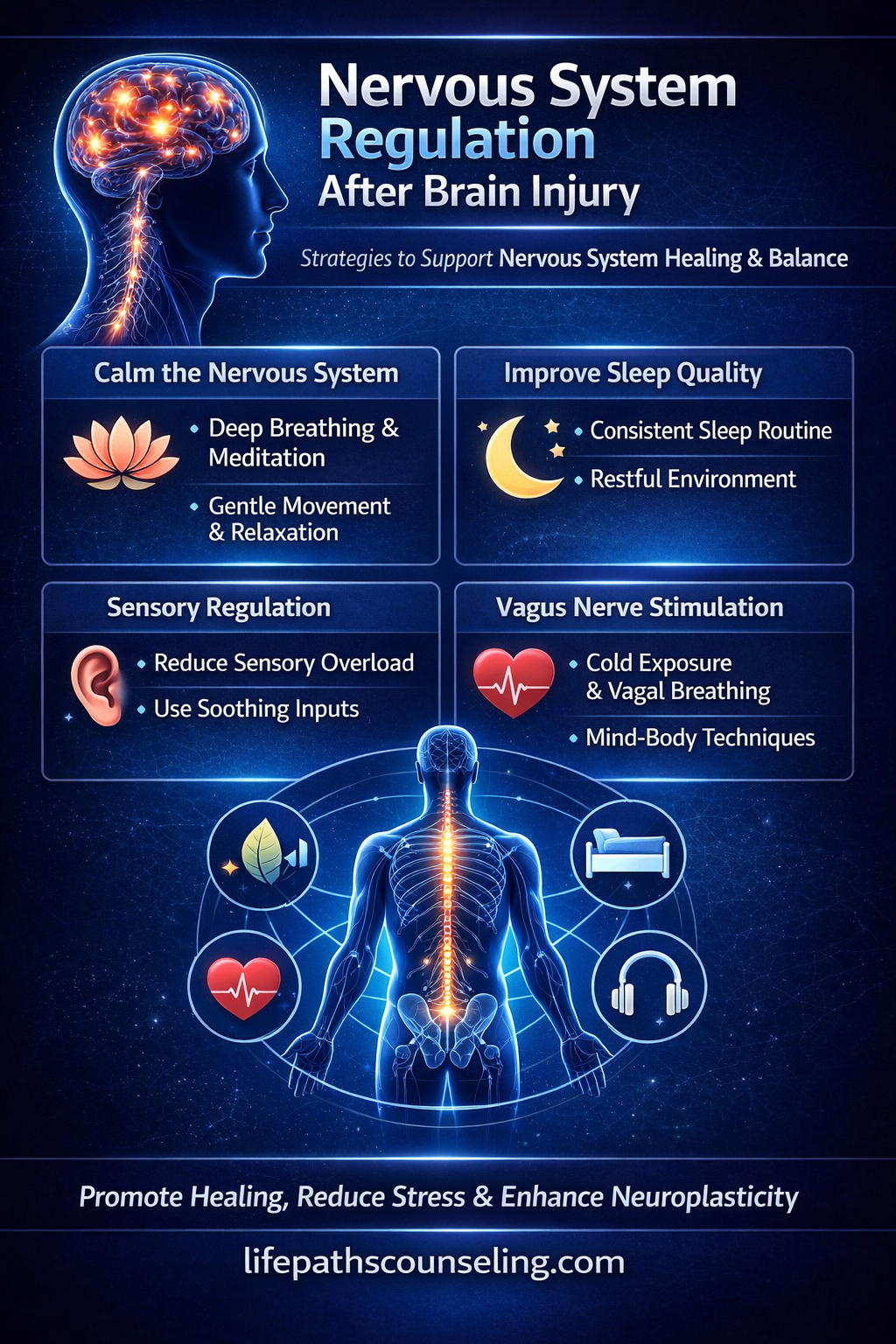
Nervous system dysregulation occurs when the brain and body have difficulty returning to a balanced, regulated state after stress.
Instead of moving smoothly between activation and rest, your system may become stuck in patterns such as:
- Hyperarousal (anxiety, panic, overstimulation)w
- Hypoarousal (shutdown, numbness, disconnection)
- Rapid swings between both states
These responses are common after brain trauma and are not a sign of weakness—they are a reflection of how the nervous system is trying to protect you.
Common Signs After Brain Injury
You may be experiencing nervous system dysregulation if you notice:
- Feeling overwhelmed in environments that used to feel manageable
- Increased sensitivity to noise, light, or stimulation
- Emotional shutdown or difficulty accessing feelings (link → Emotional Shutdown blog)
- Anxiety, panic, or a constant sense of unease (link → Emotional Regulation page)
- Difficulty calming down once activated
- Physical tension, fatigue, or restlessness
- Trouble focusing or mental overload (link → Cognitive Therapy page)
Many individuals also describe brain fog, irritability, and difficulty returning to baseline after stress.
Why This Happens
After a neurological injury, the brain’s ability to regulate stress responses can be disrupted.
The autonomic nervous system—responsible for fight, flight, and rest—may become overactive or under-responsive.
This can lead to:
- Heightened threat sensitivity
- Difficulty processing sensory input
- Slower recovery after stress
- Increased emotional reactivity
These changes are especially common after acquired brain injury (ABI), concussion, stroke, or prolonged physiological stress.
The Emotional Impact
Nervous system dysregulation is not just physical—it deeply affects how you experience yourself and the world.
Many people report:
- Feeling “not like themselves”
- Loss of control over emotional reactions
- Frustration or shame about their responses (link → Trauma Therapy page)
- Fear of overstimulation or burnout
Understanding that these reactions are neurological—not personal failures—can be a turning point in healing.
How Therapy Helps Regulate the Nervous System
Therapy focuses on helping your brain and body relearn safety and stability.
At Life Path Counseling, we use a structured, brain-aware approach that includes:
- Nervous system regulation techniques
- Somatic (body-based) awareness
- Pacing and energy management
- Sensory grounding strategies
- Emotional regulation tools (link → Emotional Regulation page)
- Gentle exposure to reduce overwhelm
We move slowly and intentionally—respecting your brain’s capacity rather than pushing beyond it.
Practical Nervous System Regulation Techniques
Some of the tools we may use include:
- Controlled breathing and rhythm work
- Grounding exercises using the senses
- Reducing overstimulation and environmental triggers
- Creating predictable routines
- Learning to identify early signs of dysregulation
These strategies are designed to help your system feel safer, more stable, and more responsive over time.
Nervous System + Cognitive Function
When the nervous system is dysregulated, cognitive functioning is often affected.
You may notice:
- Difficulty concentrating
- Memory issues
- Mental fatigue
- Slower processing
👉 This is why nervous system work is often paired with cognitive therapy
Addressing both together creates more sustainable improvement.
A Realistic Approach to Healing
Nervous system regulation is not about eliminating stress—it is about improving your ability to respond to it.
Progress may look like:
- Recovering more quickly after overwhelm
- Feeling more stable throughout the day
- Being able to tolerate more stimulation
- Rebuilding confidence in your body and mind
Healing happens gradually, but it is absolutely possible.
If you feel constantly overwhelmed, shut down, or unable to regulate your responses after a brain injury or trauma, you are not alone.
👉 Schedule a therapy session today
👉 Or explore our acquired brain injury counseling services