Anxiety After Brain Injury
Why You Feel On Edge After a TBI or Acquired Brain Injury
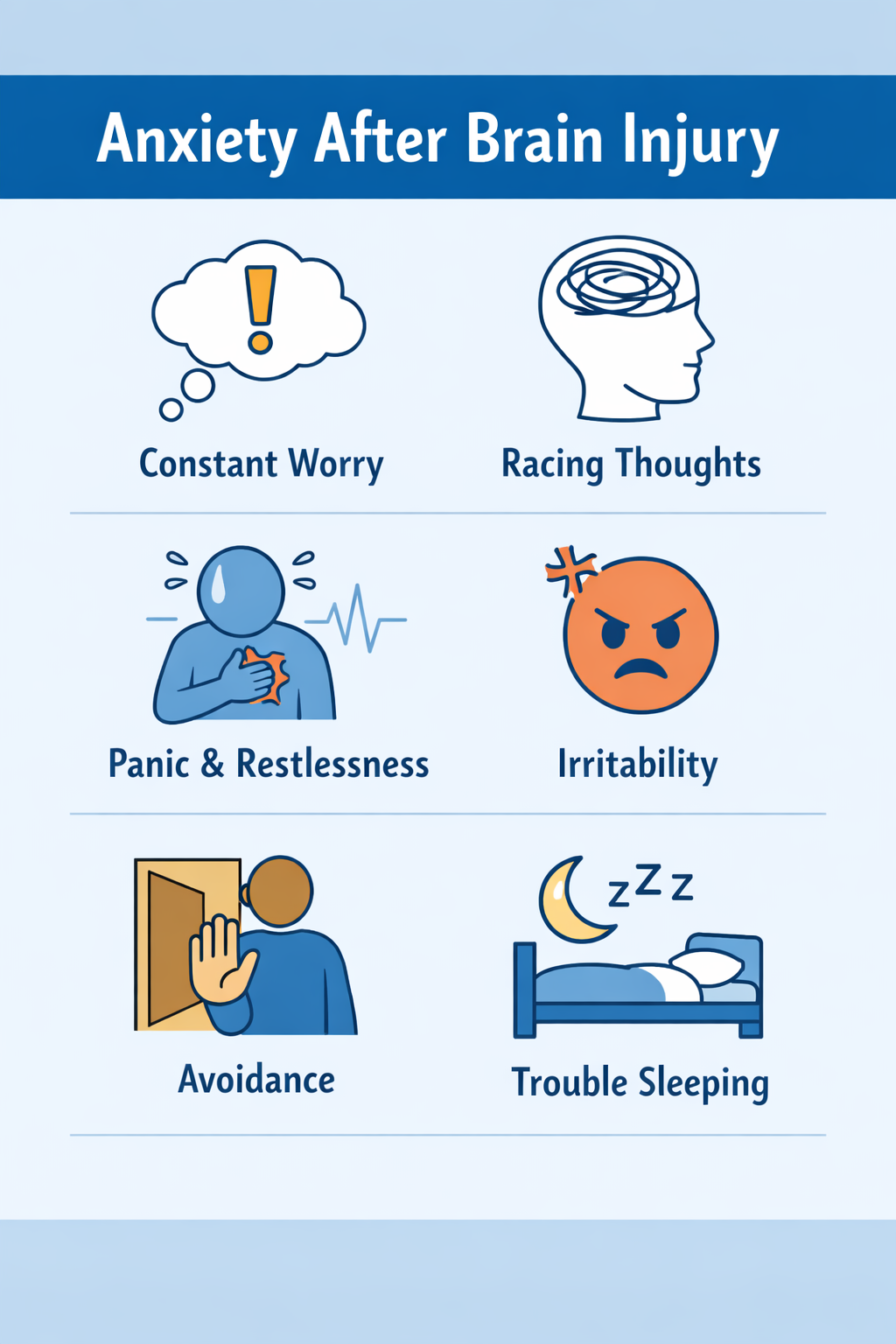
Anxiety is one of the most common emotional symptoms after an acquired brain injury or traumatic brain injury (TBI). For many people, it can feel sudden, confusing, and hard to control.
You may notice constant worry, a racing mind, a sense of dread, or a body that feels tense and alert all the time. In some cases, anxiety after brain injury can show up as panic, avoidance, irritability, or trouble sleeping.
These symptoms are not a personal failure. They are often part of how the injured brain and nervous system respond to stress, overstimulation, and change.
Why Anxiety Happens After Brain Injury
A brain injury can affect areas of the brain involved in emotional regulation, threat detection, sensory processing, and recovery from stress. At the same time, the experience of the injury itself can be frightening, disorienting, and deeply destabilizing.
Common reasons anxiety may develop after brain injury include:
- Changes in brain function and emotional regulation
- Trauma responses related to the injury or recovery process
- Sensory overload and overstimulation
- Uncertainty about symptoms, recovery, or daily functioning
- Sleep disruption and ongoing fatigue
- Pain, including headaches after brain injury
Anxiety may be caused by one factor or several working together. For many individuals, it becomes part of a larger cycle involving the brain, the body, and the nervous system.
Common Signs of Anxiety After Brain Injury
Anxiety does not always look the same after a brain injury. It may include:
- Feeling constantly on edge or unable to relax
- Racing thoughts or excessive worry
- Panic symptoms or a sense that something bad is about to happen
- Increased irritability or frustration
- Avoidance of crowds, errands, or unfamiliar places
- Difficulty concentrating
- Trouble falling or staying asleep
- Physical symptoms such as chest tightness, rapid heartbeat, or nausea
In some people, anxiety becomes more noticeable in busy environments, during social interaction, or when symptoms feel unpredictable.
The Connection Between Anxiety and the Nervous System
After a brain injury, the nervous system may remain in a heightened state of alert. This can make the body feel stuck in survival mode, even when there is no immediate danger.
When this happens, the system may respond with:
- Fight — irritability, anger, frustration
- Flight — panic, restlessness, constant worry
- Freeze — shutdown, brain fog, emotional numbness
This is one reason anxiety after brain injury often overlaps with trauma responses, sensory overload, and emotional exhaustion.
How Anxiety Can Affect Daily Life
Anxiety after brain injury can make everyday life feel much harder than it used to. It may affect:
- Work, focus, and decision-making
- Relationships and communication
- Confidence in public or social settings
- Sleep and recovery
- Willingness to leave the house or try new activities
Over time, anxiety can shrink a person’s world. Many people begin avoiding things they used to handle without much thought.
How Therapy Can Help
At Life Path Counseling, therapy is designed to support the emotional and neurological realities of brain injury recovery.
Support may include:
- Understanding why anxiety happens after brain injury
- Nervous system regulation techniques
- Identifying triggers and patterns that worsen symptoms
- Reducing fear around symptoms and setbacks
- Addressing underlying trauma responses
- Improving coping strategies for overstimulation and daily stress
- Supporting better sleep after TBI
Therapy is not about pretending everything is fine. It is about helping your brain and body feel safer, steadier, and more supported.
You Are Not Overreacting
Anxiety after brain injury is real. It can be intense, discouraging, and exhausting, but it is also something that can be understood and treated.
The goal is not to force yourself through every symptom. The goal is to build stability, reduce overwhelm, and help you feel more like yourself again.
You Don’t Have to Handle This Alone
If you are struggling with anxiety after a brain injury, reach out today for support that understands both the emotional and neurological sides of recovery.