Sensory Overload After Brain Injury
Why Everything Feels Like Too Much — And What You Can Do About It
After a brain injury, many people notice something unexpected:
everyday environments suddenly feel overwhelming.
Lights may feel too bright. Sounds too loud. Crowds too chaotic.
Even simple tasks—like going to the grocery store or having a conversation—can quickly become exhausting.
This experience is known as sensory overload, and it is one of the most common and misunderstood symptoms following an acquired brain injury (ABI) or traumatic brain injury (TBI).
What Is Sensory Overload After Brain Injury?
Sensory overload happens when the brain has difficulty processing and filtering incoming information.
Before an injury, your brain automatically prioritized what mattered and tuned out the rest.
After an injury, that filtering system often becomes disrupted.
As a result, your brain may try to process everything at once—
light, sound, movement, conversations, internal thoughts—leading to overload.
This is not a lack of resilience.
It is a neurological response to an injured and healing brain.
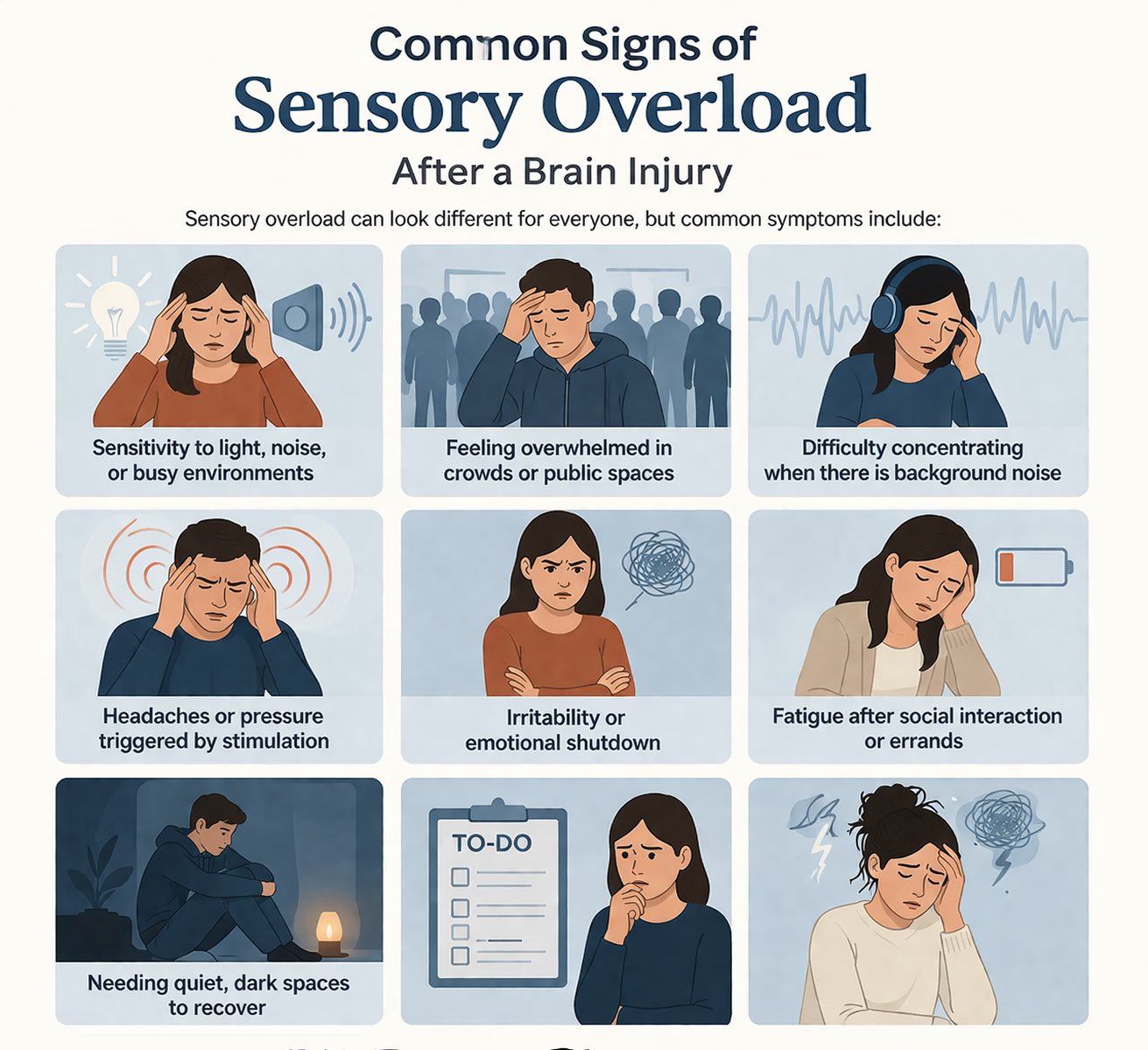
Common Signs of Sensory Overload
Sensory overload can look different for everyone, but common symptoms include:
- Sensitivity to light, noise, or busy environments
- Feeling overwhelmed in crowds or public spaces
- Difficulty concentrating when there is background noise
- Headaches or pressure triggered by stimulation
- Irritability or emotional shutdown
- Fatigue after social interaction or errands
- Needing quiet, dark spaces to recover
For many individuals, these symptoms can appear suddenly and feel unpredictable.
Why Sensory Overload Happens After a Brain Injury
After a brain injury, several systems are affected:
1. Disrupted Sensory Processing
The brain struggles to organize and prioritize incoming input.
2. Nervous System Dysregulation
The body may remain in a heightened state of alert, making stimuli feel more intense.
3. Reduced Cognitive Energy
The brain has less capacity to process multiple inputs at once, leading to quicker fatigue.
4. Increased Sensitivity to Stress
Emotional and environmental stressors amplify sensory experiences.
Because of this, environments that once felt normal may now feel overwhelming or even intolerable.
The Connection Between Sensory Overload and the Nervous System
Sensory overload is not just about the senses—it is deeply connected to the nervous system.
After a brain injury, the nervous system often becomes more reactive.
This can create a state where the brain is constantly scanning for input and potential threat.
When too much stimulation is present, the system can respond with:
- Fight (irritability, frustration)
- Flight (urge to leave or escape)
- Freeze (shutdown, brain fog, disconnection)
Understanding this response can help reduce self-blame.
Your brain is not “overreacting”—it is trying to protect you.
How Sensory Overload Affects Daily Life
Over time, sensory overload can impact multiple areas of life:
- Avoidance of public places or social situations
- Difficulty working or focusing
- Strain in relationships
- Increased anxiety or isolation
- Reduced confidence in daily functioning
Many individuals begin to feel like their world is getting smaller.
How Therapy Can Help
While sensory overload is neurological, therapy plays a critical role in recovery.
At Life Paths Counseling, therapy is tailored specifically for individuals with brain injuries.
Treatment may include:
- Education on how brain injury affects sensory processing
- Nervous system regulation techniques
- Strategies for pacing and energy management
- Gradual exposure to reduce overwhelm
- Emotional support for frustration, grief, and identity changes
- Tools to navigate social and environmental triggers
The goal is not to eliminate all sensitivity, but to help you regain stability, control, and confidence in your daily life.
Practical Ways to Manage Sensory Overload
In addition to therapy, small adjustments can make a meaningful difference:
- Wearing sunglasses or using softer lighting
- Limiting time in high-stimulation environments
- Taking structured breaks before symptoms escalate
- Using noise-reducing headphones
- Planning outings during quieter times
- Creating calm, low-stimulation spaces at home
Recovery is about working with your brain—not against it.
Healing Takes Time
Sensory overload often improves gradually as the brain heals, but progress is not always linear.
Some days will feel easier than others.
Setbacks during stress or fatigue are normal.
With the right support and strategies, many individuals experience significant improvement over time.
You Are Not Alone
If you are experiencing sensory overload after a brain injury, what you are feeling is real—and it is treatable.
You do not have to navigate this alone.
Reach out today to begin support that understands brain injury at a deeper level.